
Track Pants vs Jogging Pants: A Fabric and Design Guide for Private Label Brands
1. Introduction to the Track Pants vs Jogging Pants Market
In the rapidly evolving athleisure and activewear landscape, precision in product nomenclature is critical for apparel brand owners and product developers. While consumers often use the terms interchangeably, understanding the technical differences between track pants vs jogging pants is essential for accurate product positioning, manufacturing, and marketing. For more insights on activewear trends, visit our apparel industry blog. A misstep in fabric selection or silhouette design can lead to mismatched consumer expectations and poor sales performance.
The global athleisure market continues to experience robust growth, driven by a shift toward versatile, comfort-first clothing. Consumers now expect garments that transition seamlessly from athletic activities to casual social settings. For private label brands, capitalizing on this trend requires a deep understanding of how fabric weight, drape, and functional details define these two distinct styles. By aligning product development with the specific use cases of track pants and joggers, brands can optimize their collections for targeted consumer segments.
2. Fabric Composition: Technical Synthetics vs. Heavyweight Knits
The primary differentiator in the track pants vs jogging pants debate lies in the fabric composition. The choice of material dictates the garment’s weight, breathability, moisture-wicking capabilities, and overall aesthetic. For more details on material properties, consult this industry reference.
Track Pant Materials: Nylon, Polyester, and Taslan
Track pants are traditionally engineered for athletic performance and outdoor warm-ups. Consequently, they utilize lightweight, woven synthetic fabrics that offer durability and weather resistance.
– **Polyester:** The industry standard for activewear. Polyester is highly durable, resistant to stretching and shrinking, and inherently moisture-wicking. It is often treated with chemical finishes to enhance water repellency or breathability.
– **Nylon:** Known for its exceptional strength-to-weight ratio. Nylon track pants offer superior abrasion resistance and a smooth, slightly glossy finish.
– **Taslan:** A modern polyester or nylon fabric engineered to look and feel more like cotton while retaining the quick-drying benefits of synthetics. It is highly wind-resistant, making it ideal for outdoor training gear, similar to our quick-dry outdoor shorts.
Jogging Pant Materials: French Terry, Fleece, and Cotton Blends
Jogging pants, commonly referred to as joggers, prioritize warmth, comfort, and a soft hand-feel. They are constructed from knit fabrics rather than woven synthetics.
– **French Terry:** A knit fabric featuring loops on the reverse side and a smooth face. It is highly breathable, absorbent, and offers a mid-weight feel suitable for year-round wear.
– **Fleece:** A brushed fabric that traps heat efficiently. Heavyweight fleece (typically 300+ GSM) is the go-to material for premium, structured streetwear joggers.
– **Cotton Blends:** Blending cotton with polyester enhances the fabric’s durability, reduces shrinkage, and introduces a degree of stretch. Cotton-rich blends provide the classic, cozy aesthetic that loungewear consumers demand.
3. Design and Silhouette Variations
Beyond fabric, the physical construction and design details distinguish track pants from jogging pants. Product developers must specify these elements in their tech packs to ensure the factory executes the intended design. For guidelines on tech pack creation, refer to this technical reference.
Fit and Cut: Straight Leg vs. Tapered Ankle Cuffs
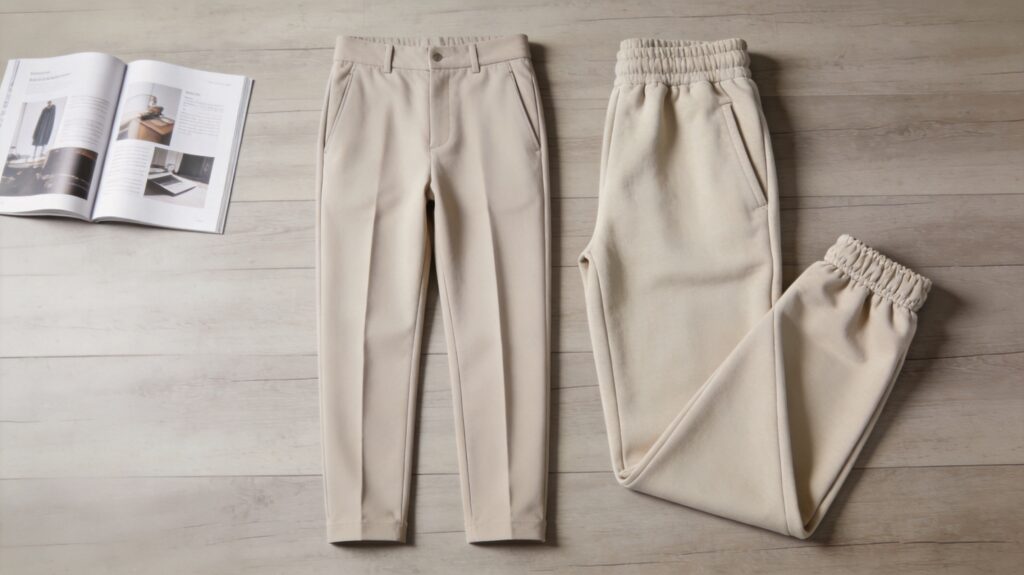
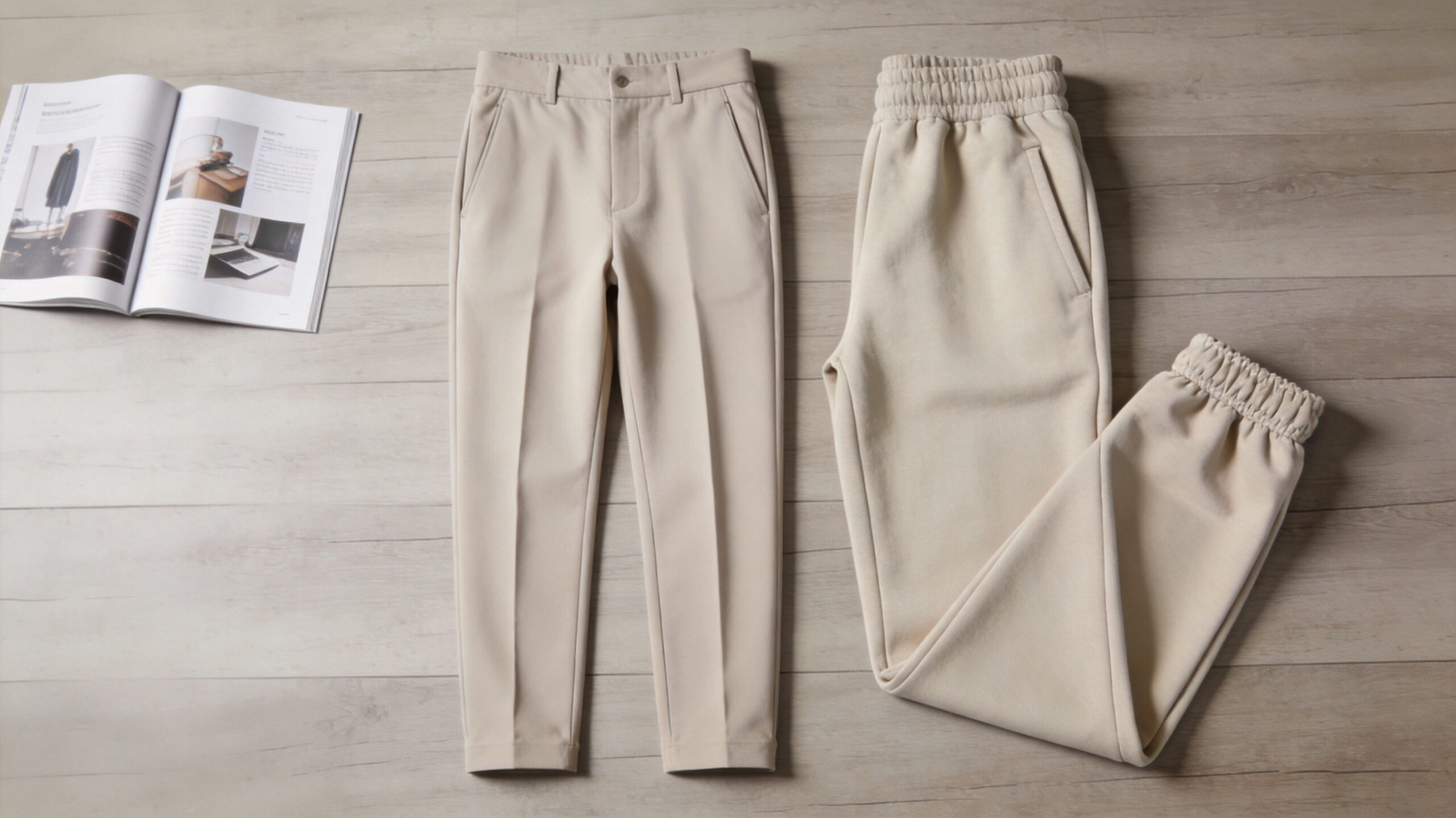
– **Track Pants:** Traditionally feature a relaxed, straight-leg silhouette. The design is intended to fit loosely over athletic shorts or compression gear, allowing athletes to strip them off easily before a game. Modern variations may offer a slim fit, but they generally maintain a straight drop from the knee down.
– **Jogging Pants:** Characterized by a distinct tapered fit that narrows toward the ankle. The defining feature of a jogger is the elasticated or ribbed ankle cuff, which keeps the fabric secure against the leg and showcases the wearer’s footwear—a key selling point in the streetwear market.
Functional Details: Zippers, Drawstrings, and Pocket Placement
– **Track Pants:** Often incorporate functional hardware tailored for sports. This includes side-seam zippers at the ankle cuffs to allow easy removal over sneakers. Pockets are typically zippered to secure personal items during high-movement activities.
– **Jogging Pants:** Feature design elements focused on comfort and casual utility. They utilize thick, flat-knit drawstrings, ribbed waistbands, and deep side-slit or patch pockets. Back pockets are also common in streetwear joggers to mimic traditional trouser styling.
4. Performance and Use Case Alignment
When evaluating track pants vs jogging pants for your next collection, understanding the end-use case of each garment allows private label brands to market their products effectively and choose the correct performance finishes.
Track Pants for Athletic Performance and Warm-ups
Track pants are built for movement. Their synthetic construction provides windproofing, water resistance, and rapid moisture evaporation. They are the preferred choice for warm-up suits, track and field athletes, and outdoor training sessions. Brands targeting gyms, sports clubs, or high-performance athletes should focus their development on lightweight, breathable track pants with mechanical stretch.
Jogging Pants for Loungewear and Streetwear Aesthetics
Jogging pants have evolved from basic running gear into a staple of modern streetwear and premium loungewear. Their heavy knit construction provides thermal insulation and a structured drape that appeals to fashion-conscious consumers. Marketing campaigns for joggers should emphasize comfort, versatility, and styling options for casual outings, travel, and home wear.
5. Sourcing and Manufacturing Guide for Private Label Brands
When sourcing these products from apparel manufacturers, several commercial factors will influence your production costs and timelines. To discuss your project, you can contact our sourcing team.
Cost Drivers and Minimum Order Quantities (MOQs)
– **Fabric Weight and Type:** High-GSM (grams per square meter) organic cotton fleece for joggers is generally more expensive than standard polyester woven fabrics for track pants. However, custom-dyed synthetic fabrics for track pants may carry higher MOQs from textile mills.
– **Hardware:** Zippers (especially waterproof or branded zippers) on track pants increase the Bill of Materials (BOM) cost. Joggers with custom metal aglets on drawstrings and embroidered eyelets will also incur higher trim costs.
Customization Options: Printing, Embroidery, and Tech Packs
– **For Track Pants:** Sublimation printing and heat-transfer vinyl (HTV) work best on synthetic fabrics. Screen printing requires specialized inks to prevent dye migration on polyester.
– **For Jogging Pants:** High-density embroidery, puff printing, and chenille patches are highly effective on heavy fleece, adding a premium feel that justifies a higher retail price point.
– **Tech Packs:** Ensure your tech packs clearly define the fabric weight, fiber content, seam construction (e.g., flatlock stitching for joggers to reduce chafing), and tolerance levels for elastic recovery.
6. Quick Reference: Track Pants vs. Jogger Specifications
To assist your design and sourcing teams, here is a summary of the key differences at a glance:
Track Pants
– **Fabric Type:** Woven Synthetics (Polyester, Nylon)
– **Fabric Weight:** Lightweight (100–180 GSM)
– **Silhouette:** Straight leg, relaxed fit
– **Ankle Style:** Open hem, often with side zippers
– **Primary Use:** Athletic performance, warm-ups, outdoor sports
– **Key Features:** Moisture-wicking, windproof, quick-dry
Jogging Pants
– **Fabric Type:** Heavyweight Knits (Fleece, French Terry, Cotton Blends)
– **Fabric Weight:** Mid to Heavyweight (250–400 GSM)
– **Silhouette:** Tapered leg, slim fit
– **Ankle Style:** Ribbed or elasticated cuffs
– **Primary Use:** Streetwear, loungewear, low-intensity exercise
– **Key Features:** Warmth, soft hand-feel, structured drape
Conclusion
Choosing between manufacturing track pants and jogging pants depends entirely on your brand’s target demographic and positioning. If your audience demands high-performance athletic gear, track pants constructed from technical synthetics are the logical choice. If your focus is on comfort, streetwear trends, and premium loungewear, investing in heavyweight knit joggers will yield better market alignment. By understanding these nuances, private label brands can make informed sourcing decisions that drive product satisfaction and brand loyalty.